2026 PRESENTATIONS
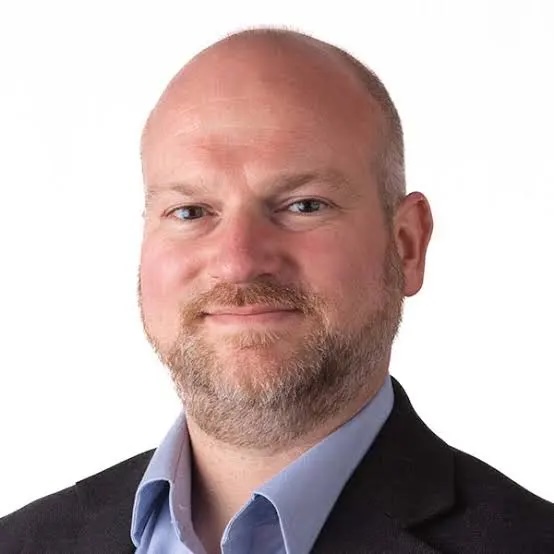
Allen Pietobon
“Food Fights: A Surprising History of American Dining”
What Americans eat has changed drastically in the past 100 years. In the early 1900s, wealthy Europeans would travel to the United State for vacation simply to enjoy the splendid and unique cuisine. However, since that time, our nation has transformed from having a relatively wholesome and nourishing food system to having a food culture laden with ultra-processed unhealthy foods today. What happened and how did we get here?
Dr. Allen Pietrobon will take us on a journey through the culinary history of the United States during the past century. He will sample world-famous American restaurants of the turn of the 20th century and push a shopping cart through the 1950s “dark ages” of American cuisine with the cavernous supermarkets peddling frozen TV dinners and gelatin salads. Allen will explore watershed moments and crises, such as Prohibition and World War II, that radically changed how and what we eat. While these occurrences led to government policies aimed at alleviating temporary problems in our food system, the results included an unintended flood of cheaper and more highly processed foods.
See how what Americans were eating over the decades had a major impact on American society.
Dr. Allen Pietrobon is an Associate Professor and Program Chair of the Global Affairs department at Trinity University in Washington, D.C. His latest book, Norman Cousins: Peacemaker in the Atomic Age, explores the secret diplomatic missions the prominent journalist Norman Cousins conducted behind the Iron Curtain at the height of the Cold War. In researching this field of interest, Allen traveled to Hiroshima, Nagasaki and even went into the “exclusion zone” at Chernobyl to pursue his interest in the global history of nuclear policies. As a result of his work on international nuclear weapons policy, he participated in the 2026 Nuclear Non-Proliferation Treaty Review Conference at the United Nations headquarters.
Allen earned a B.A, in History from the University of Waterloo, an M.A. in History from Wilfrid Laurier University, and his Ph.D. in American History and Foreign Policy from American University. He is an award-winning teacher, historian, and public speaker who brings the curiosity of a historian and the ease of a natural storyteller to every class he teaches. Although his formal expertise lies in global affairs, his interests span economics, politics, culture, and social issues; an expansive curiosity that shapes both his research and his public talks. When a subject captures his attention, he dives deeply into it, absorbing ideas, patterns, and perspectives that later surface in his talks.
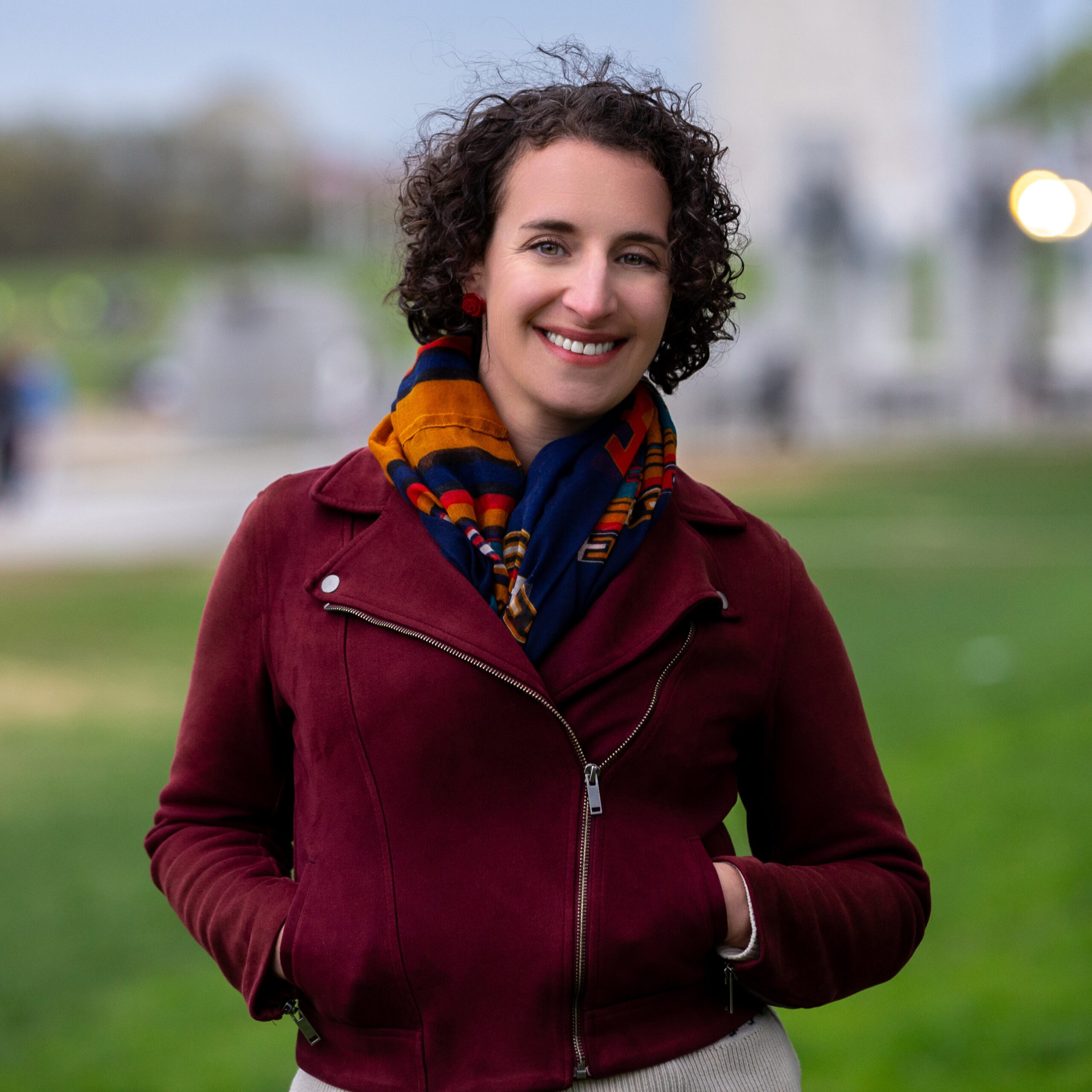
Carolyn Muraskin
“Pennsylvania Avenue: From Murder Bay to Main Street”
Pennsylvania Avenue may be the nation’s most iconic street, but its history stretches far beyond parades and protests. This virtual tour traces the corridor linking the White House to the U.S. Capitol—from the crime-ridden neighborhood of “Murder Bay” to a grand boulevard at the heart of the capital. Once home to brothels, saloons, and gambling halls, the Avenue has been repeatedly reshaped through urban reform, historic preservation, and monumental design.
From Neoclassicism to Brutalism, Pennsylvania Avenue now reveals a fascinating architectural timeline in brick, marble, and concrete. Explore the buildings and planning decisions that turned a notorious district into a symbol of the capital’s civic ambition and evolving identity.
The White House – The world’s most famous residence, reshaped by fire, war, modernization, and ego.
Federal Triangle – A monumental Neoclassical complex that replaced “Murder Bay” in a dramatic sweep of 20th-century government urban planning.
Eisenhower Executive Office Building – A bold French Second Empire masterpiece that pushed its architect, and the city, to the brink.
Old Post Office Tower – A Romanesque Revival behemoth saved from demolition, offering one of the city’s best views.
Edgar Hoover FBI Headquarters – A stark Brutalist icon of the Cold War era, designed with security and institutional power in mind.
Temperance Fountain – A quirky relic of a passionate, if misguided, 19th-century reformer.
Carolyn Muraskin is the founder of DC Design Tours, where she and her team of expert guides lead architecture and design-focused tours of Washington, D.C., for curious locals, visitors, and institutions. Carolyn left her drafting desk behind in 2015 and started DC Design Tours so she could talk about buildings rather than design them. Drawing on her background in architecture and urban planning, Carolyn uses the built environment as a storytelling lens, examining how design, materials, and planning have shaped the Washington we experience today.
Since launching DC Design Tours, Carolyn and her guides lead walking, driving, bike, boat and virtual tours across the District, including the National Mall, Capitol Hill, Georgetown, U Street, Adams Morgan, Embassy Row, and Anacostia. Her work includes partnerships with the National Trust for Historic Preservation, the National Academy of Sciences, the Brookings Institution, the Discovery Channel, and the Smithsonian Institution, where she also serves as a lecturer and guide.
Carolyn holds a degree from the University of Maryland School of Architecture, Planning, and Preservation and previously worked as an architectural designer on projects ranging from historic preservation to large-scale master planning. She lives in Northwest DC and is happiest helping people see familiar places with fresh eyes and notice design details hiding in plain sight.

Justin M. Jacobs
“How Museums Got Their Treasures: Bursting the Myths”
It has become increasingly common in recent decades for Western museums to be portrayed not as sites of preservation and education but rather as carefully curated crime scenes in which the sins of Western imperialism are put on display in material form. But is this really the case? Drawing on his provocative new book, Plunder? How Museums Got Their Treasures, historian Justin M. Jacobs will provide an overview of the five primary channels through which Western museums acquired their artifacts: military plunder, diplomatic gifts, antiquity dealers, stationary excavations, and mobile expeditions.
Justin will show how, contrary to popular assumption, the native peoples who lived in the lands from which art and antiquities were removed were nearly always supportive of the Western collector’s activities and enthusiastically lent their assistance in exchange for a diverse range of “compensations” deemed more valuable at the time than what was being removed. Only by gaining a greater appreciation for the original historical context that informed the transfer of art and antiquities from source country to Western museum, Justin argues, can we properly assess the on-going calls for cultural restitution that define our current era.
Justin M. Jacobs is Professor of History at American University. He earned his B.A. in English Language and Literature and an M.A. in International Studies (China) at the University of Washington and his Ph.D. in Modern Chinese History at the University of California, San Diego. His research concerns the history of modern China, archaeological expeditions, Western museums, and UNESCO World Heritage sites. Justin is the author of several books, including The Compensations of Plunder: How China Lost Its Treasures (2020), and Plunder? How Museums Got Their Treasures (2024). He has also created two online streaming series for The Great Courses: “World Heritage Sites: Exploring the World’s Greatest Places” and “World Heritage Sites II: 12 More of the World’s Greatest Places.”
In May 2027 Justin will serve as a scholarly guide for a Great Courses Journeys tour to Japan. He regularly gives talks for the Smithsonian Associates program, consults with major media outlets and legal firms, and has testified before Congress. More than sixty of his recorded lectures on Chinese and Japanese history are available at no cost on the podcast Beyond Huaxia: A College History of China and Japan. He is currently writing a book on the history of true crime in modern China. In his free time, Justin enjoys rooting for Seattle sports teams, reading fantasy and detective fiction, traveling around Iceland, and playing table-top role-playing games.